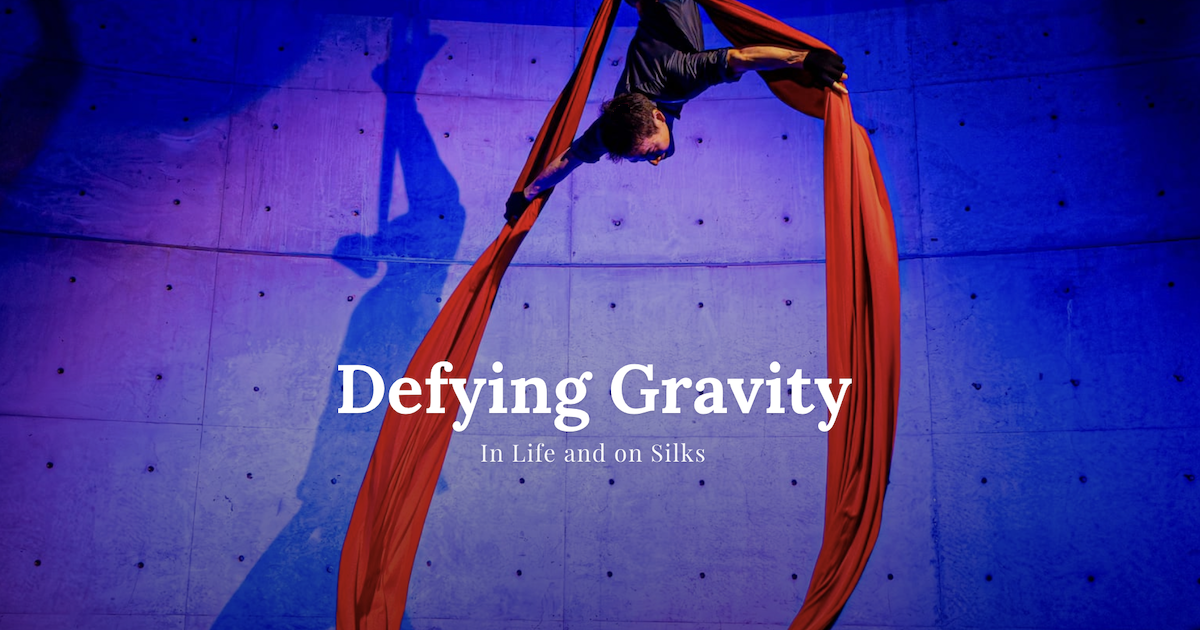
Spin sequences can take infinitely many forms (see the previous article, A Study in Spin), yet once you begin from the purpose of the stage and the demands of the performance, then that more or less determines what kinds of spin skills ought to be used, in what order, and in what posture, on what axis, and at what speed.
For instance, if the music or the stage theme calls for freedom or a sense of release above all, then what is needed is handling that privileges expansive movement and seamless transitions, as though a current of wind were passing cleanly through.
If, on the other hand, a given passage is meant to express something like danger or intoxication, then fluent continuity is less fitting than handling that introduces stronger contrasts, as though taking the full force of the wind: deliberately blurring the axis, letting the body trace curves instead of holding a straight line, or suddenly letting the spin lose speed only to drive it back into rapid rotation.
From the standpoint of composition, if, for example, you want to give your hands a rest before the next power-heavy sequence, then you will likely need a spin in which you do not grip the silks by hand at all (one in which the body can simply be entrusted to the silks, leaving both hands free in the air for a while). And if, say, your routine as a whole is short on flexibility poses, then adding them within the spin can also strengthen the structure.
Some competitive stages require a level of difficulty that even a seasoned judge will recognize as genuinely ambitious. Other show stages ought to prioritize, over technical difficulty as such, an immediately striking kind of spectacle, the sort that catches the eye of a general audience at once.
Or there may be smaller, more intimate event stages shared among studio mates, where what you want is freshness or surprise perceptible only to your own kind.
This is not unique to spin, but to the eye of an experienced aerialist, it is often possible to tell what sort of skill is coming next from nothing more than the way the silks are wrapped or the preparation that precedes it. Precisely for that reason, the slightest betrayal of that near-future prediction can create freshness instead.
For instance, I often saw the upside-down spin performed (in Japan) because it has an obvious brilliance even for a general audience, but precisely because it is a skill everyone does, I came to see that one can bring out a very personal kind of originality that is legible only to one’s own kind.
The obvious idea, of course, is to create originality through a radically new skill, or through a skill no one else does, and that too is worthy. But when everyone in the room already knows how such things are usually read, there is also a special pleasure in watching someone slip small acts of originality into the established pattern.
Taken together, the skills you choose, the postures you take, the amount of speed you build, and the way you choose to show it are all more or less determined by working backward from the goal of the piece, the nature of the stage, the music, and the like.
Spin is certainly a matter of bodily control, but when it is understood also as a matter of composition and staging, its contour begins to come clearly into focus.
—
A good spin, I think, is one that looks free. But that freedom is not a matter of mere spontaneity. It only begins to look truly, effortlessly free when the density of control is high enough.
Rotation is a strange thing. To the one watching, it looks like release; to the one doing it, it is often just one adjustment after another. You align the axis, read the speed, gather in a body that is on the verge of collapse, and go on choosing the next shape to show.
That cold accumulation of judgments gradually becomes a kind of release, as light and diffuse as smoke thinning into air.
This is why I do not think of spin as mere ornament.
Spin struck me as an extremely constrained, extremely intelligent technique for making the body appear, for a single instant, to have become free.
That said, in the end I suppose I just want to whirl around in the air.
I’ll be writing more stories for aerial lovers!
Subscribe to get notified when a new post is published.
 Tatz
Tatz
 Tatz
Tatz